
Mental model
A line you can remember
Every lesson opens with one short, sticky phrase that captures the concept — easier to recall than any definition.
998 lessons · 5 subjects · North American K–12
Sense of Study gives North American K–12 students direct answers to math, science, statistics, and CS concepts, then shows when to use each idea. Every lesson is built around one rule: teach the recognition problem, not just the definition.
Free to read every lesson and try every practice problem. No account needed.
── Tutor replacement
Replaces 90%+ of what an off-campus math tutor does: lessons that teach recognition, 20-question practice packs graded server-side, and a parent report on /family that shows whether your kid is mastering material and keeping the standing slots you set.
Math tutors do things we don't — diagnosing learning disabilities, building human rapport, reading body language. If your child needs those, no software replaces them. For the explanation, pacing, and progress-tracking parts, we cover ~90% of what a tutor does at <5% of the price.
The contract: mastery, cadence, visibility.
If we don't keep this contract, you'll see it on /family before you see it on a report card.
What makes a lesson different
Mental model
Every lesson opens with one short, sticky phrase that captures the concept — easier to recall than any definition.
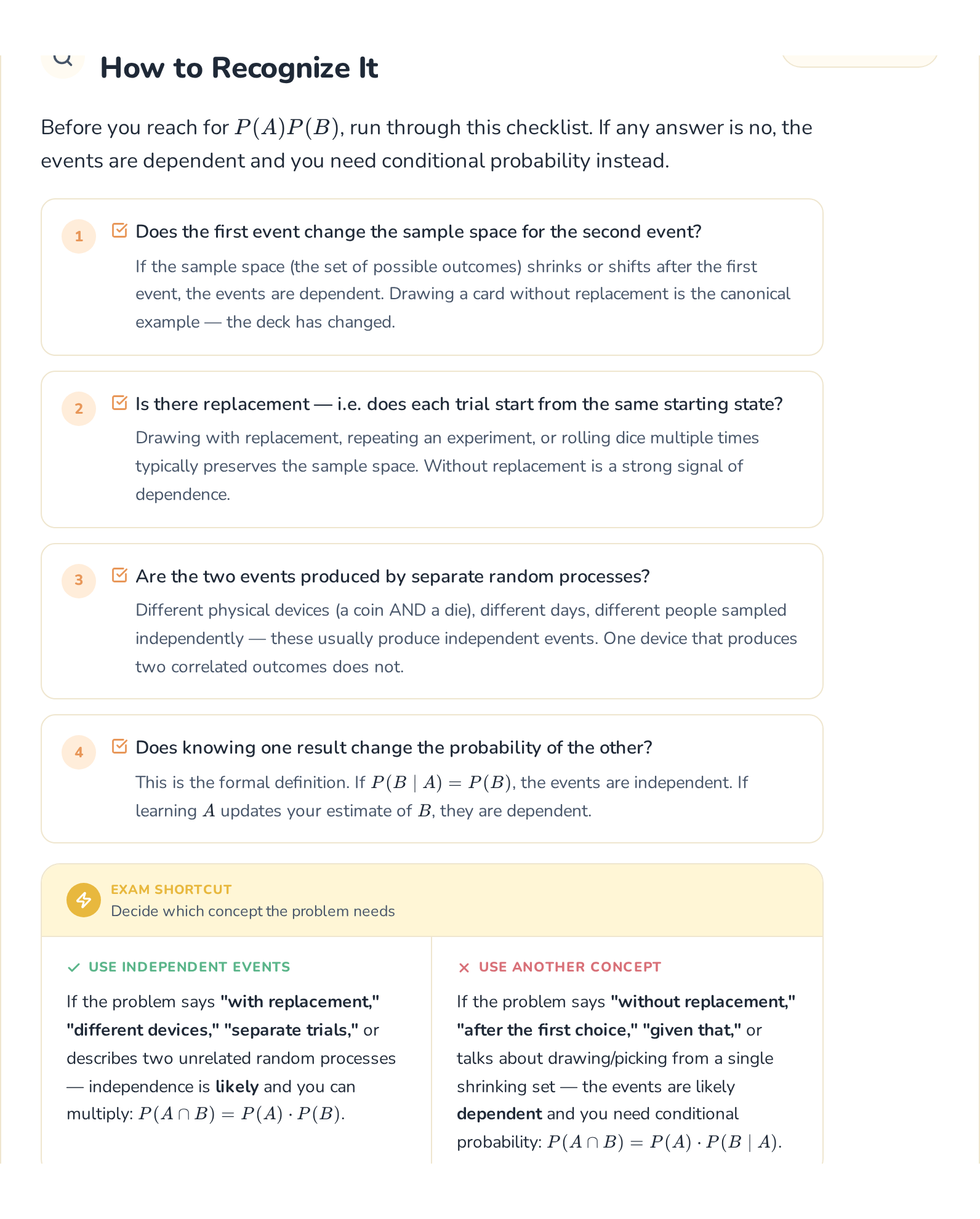
Recognition checklist
Not just what a concept means, but which clues in a problem tell you it applies. The single most asked-for thing students miss in textbooks.
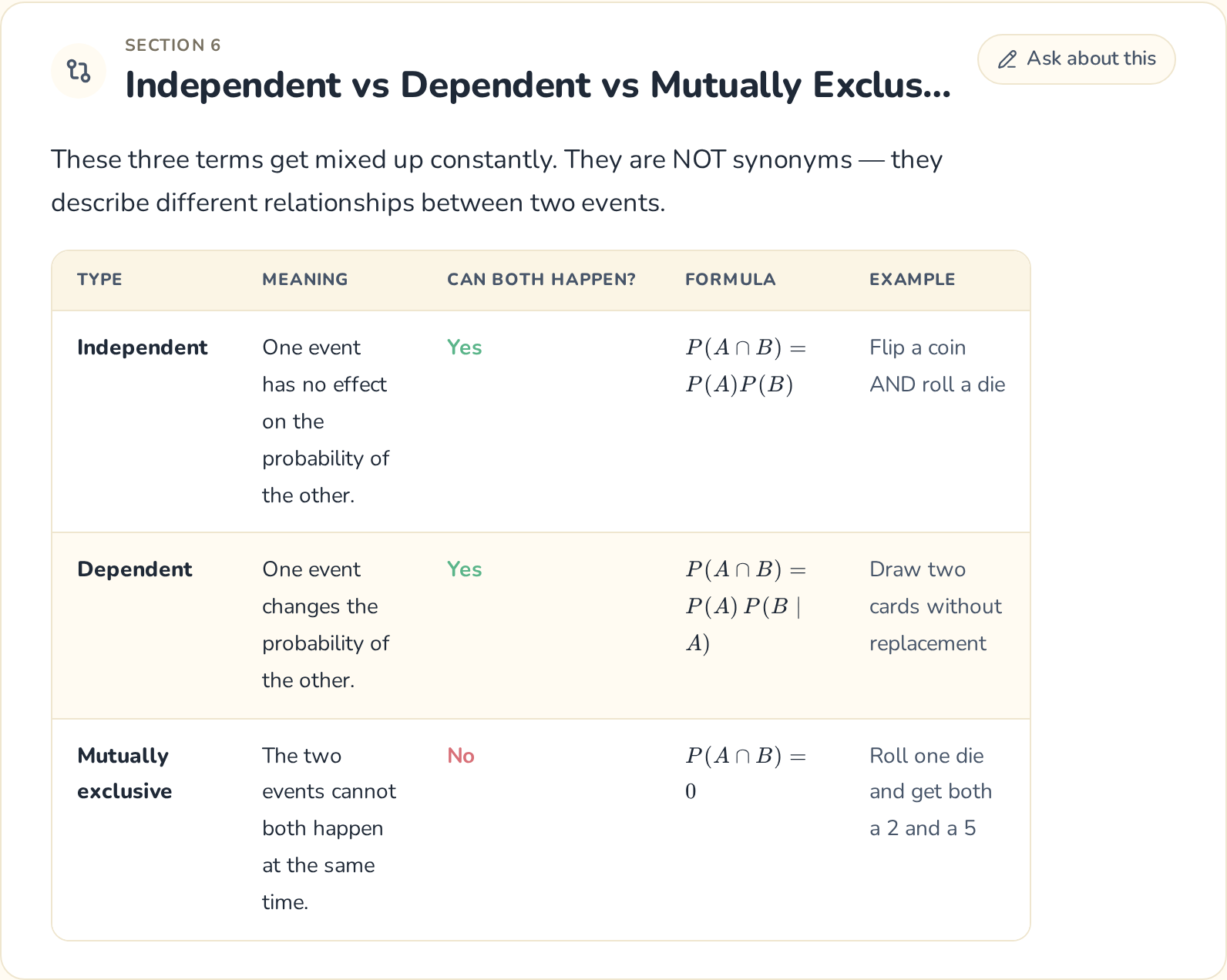
Comparison table
Side-by-side rows that disambiguate this concept from the 1–2 it gets confused with. Independent vs dependent vs mutually exclusive, every page.
What's covered
Every concept on the site uses the same 13-section structure: quick answer, why it matters, intuition, recognition, comparison, formula, worked examples, mistakes, practice, learning path, and more.
998 lessons · 51,014 practice questions · every worked solution human-reviewed · built by a parent.
Why recognition-first works
Recognition over recall
"Students who can recognize when a concept applies outperform those who can only define it."— Concept-mastery research, applied across STEM education.
Built-in retrieval
"Spaced retrieval beats massed practice for long-term retention."— Roediger & Karpicke (2006). The testing effect.
Worked examples that teach the why
"Worked examples paired with explanations produce better transfer than examples alone."— Sweller (2010). Cognitive load theory.
Pricing
All 998 lessons and every practice question are free — including the final answer and first solution step. The Family plan unlocks every full worked solution, unlimited mastery checks, up to 5 kid profiles, and the parent dashboard.
See plans →